How to Choose the Right Grow Bag Size for Different Plants
How to Choose the Right Grow Bag Size for Different Plants
Choosing the right grow bag size is an important step when growing plants in containers. A bag that is too small can restrict root development, while a bag that is unnecessarily large may use more growing media and take up more space than needed.
The right size depends on several factors, including the type of plant, its current size, expected mature size, root system, and growing period. In this guide, we explain how to choose a suitable grow bag size for different types of plants.
Why Grow Bag Size Matters
A plant's root system needs enough space to develop properly. When the container is too small, the roots can become crowded, which may limit the plant's access to water, nutrients, and oxygen.
On the other hand, choosing a grow bag that is much larger than necessary is not always the best solution. It can increase the amount of growing media required and make handling more difficult.
Choosing an appropriate grow bag size provides enough room for root development while keeping the growing system practical for planting, transportation, and daily management.
Grow Bag Size Guide by Plant Type
There is no single grow bag size that works for every plant. The following ranges can be used as a general reference. Actual requirements may vary depending on the plant variety, growing conditions, cultivation period, and management practices.
20–30L Grow Bags – Small Plants and Young Plants
Smaller grow bags are suitable for plants with relatively compact root systems and young plants that will later be transplanted into larger containers.
Typical applications include:
- Young ornamental plants
- Small flowering plants
- Herbs and vegetables
- Seedlings and young nursery plants
For plants that are expected to remain in containers for a longer period, moving to a larger grow bag as the root system develops may be necessary.
40–60L Grow Bags – Medium-Sized Plants
Medium-sized grow bags provide more root space and are suitable for plants that have developed beyond the seedling stage.
They can be used for:
- Larger ornamental plants
- Shrubs
- Medium-sized fruit plants
- Nursery plants requiring additional growing space
These sizes can be a practical choice for nurseries that need to grow plants to a larger marketable size before sale or transplantation.
80–150L Grow Bags – Larger Plants and Fruit Trees
As plants become larger, their root systems generally require more growing space. Grow bags in the 80–150L range can be suitable for larger ornamental plants, fruit plants, and young trees.
Common applications include:
- Fruit trees
- Larger shrubs
- Ornamental trees
- Landscape plants
- Advanced nursery stock
When selecting a size for fruit trees, consider not only the current plant size but also how long the plant will remain in the grow bag.
200L and Above – Large Trees and Long-Term Cultivation
Large grow bags can provide the additional root volume required by larger trees and plants intended to remain in containers for extended periods.
Depending on the plant and cultivation system, larger sizes such as 200L, 300L, 500L, 1000L, or even larger can be considered for:
- Large fruit trees
- Specimen trees
- Mature ornamental plants
- Landscaping projects
- Large nursery stock
For these applications, the strength of the bag, the quality of the handles, and the ease of handling become increasingly important.
How to Choose the Right Size
When selecting a grow bag, consider the following factors.
1. Plant Type
Different plants have different root systems. A shallow-rooted plant may require less growing volume, while a tree or large fruit plant generally needs considerably more space.
2. Current Plant Size
The size of the plant when it is placed into the grow bag should also be considered. A young plant does not necessarily need a very large container immediately, while an established plant may require a larger growing volume.
3. Expected Growing Period
If the plant will stay in the same grow bag for only a short period before being transplanted, a smaller size may be sufficient.
For long-term nursery production, selecting a larger grow bag from the beginning can provide more room for continued root development.
4. Root Development
Root growth is an important consideration when choosing container size. The goal is to provide sufficient space for healthy root development without unnecessarily oversizing the container.
5. Handling and Transportation
For large plants, the grow bag itself also needs to be practical to handle. Large-volume bags may contain substantial amounts of growing media and become heavy when moved.
Strong handles and durable woven fabric can make a significant difference during nursery handling and transportation.
Choosing the Right Grow Bag Material
Size is only one part of choosing a suitable grow bag. The material and construction also matter.
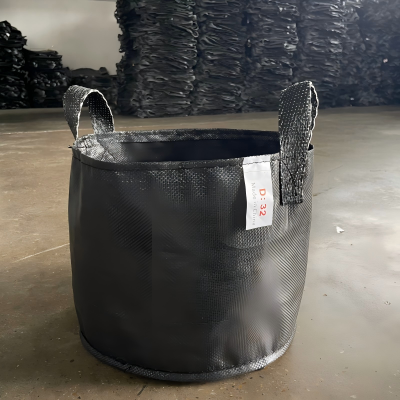
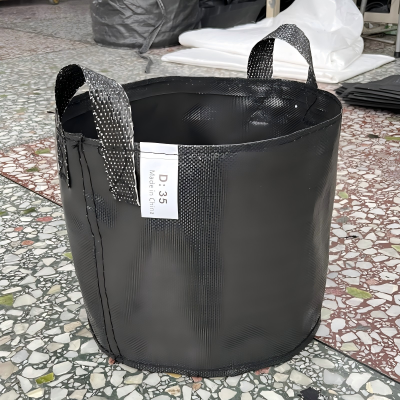
HOKBG PP woven grow bags are made from high-strength woven PP fabric. The uncoated woven structure provides breathability and water permeability, allowing air and water to pass through the fabric.
The open woven structure can also support air pruning, helping reduce root circling and encourage the development of a denser, more fibrous root system.
For outdoor applications, UV-resistant and aging-resistant materials are also important, particularly when grow bags are exposed to sunlight for extended periods.
HOKBG Grow Bag Sizes
HOKBG supplies PP woven grow bags in sizes ranging from 20L to 2000L+, covering a wide range of nursery, horticultural, landscaping, and agricultural applications.
Custom dimensions and printing are also available according to customer requirements. Whether you are growing young nursery plants, fruit trees, ornamental plants, or larger landscape trees, selecting the appropriate grow bag size can help create a more suitable growing environment and make nursery management more practical.
Final Thoughts
The best grow bag size depends on the plant, root system, current size, expected growth, and length of time the plant will remain in the container.
Instead of choosing a size based only on the plant's current appearance, consider its expected root development and cultivation period. This can help ensure that the plant has sufficient growing space throughout the production cycle.
With grow bag sizes from 20L to 2000L+, HOKBG provides flexible options for different plants and cultivation requirements.