Grow Bags for Southeast Asia: Tropical Heat, Monsoon Season & Nursery Buyer’s Guide
Grow Bags for Southeast Asia: Tropical Heat, Monsoon Season & Nursery Buyer’s Guide
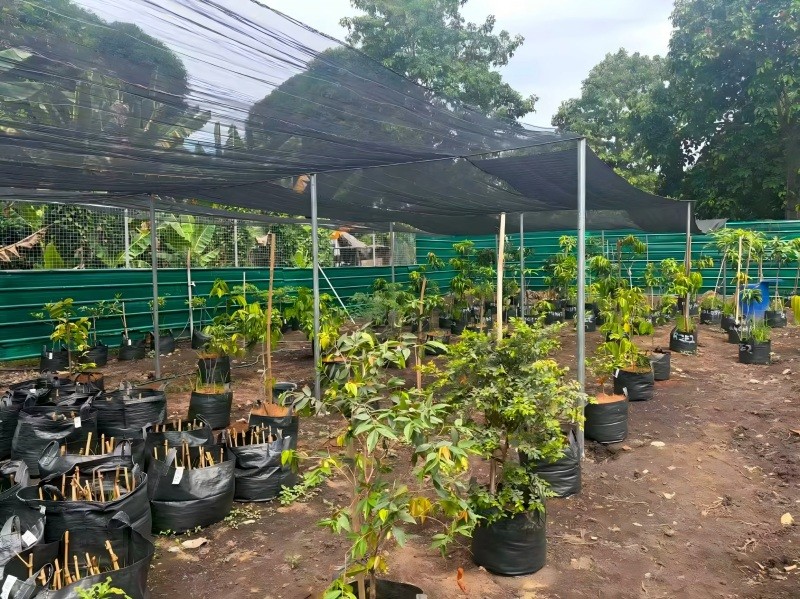
Southeast Asia has a strong and growing horticultural industry, with commercial nurseries producing ornamental plants, fruit trees, palms, landscape trees, tropical plants, and other nursery stock. However, growing plants in this region presents unique challenges for containers. High temperatures, intense sunlight, high humidity, heavy rainfall, and monsoon seasons can place significant stress on grow bags.
For professional nurseries, choosing the right grow bag is not simply about size and price. Material durability, UV resistance, drainage, air permeability, structural strength, and ease of handling all influence nursery efficiency and plant quality.
This guide explains what Southeast Asian nurseries should consider when selecting grow bags for tropical production conditions.
1. Why Southeast Asia Requires Specialized Grow Bags
Many Southeast Asian countries experience tropical or subtropical climates. Depending on the location and season, nurseries may deal with:
• High temperatures for long periods
• Strong sunlight and UV exposure
• High humidity
• Heavy rainfall
• Monsoon conditions
• Frequent irrigation
• Wet and dry cycles
• Outdoor storage and plant movement
These conditions can accelerate the aging of ordinary nursery containers. A grow bag that performs well in a mild climate may not provide the same service life under continuous tropical UV exposure and heavy rainfall.
For commercial nurseries, the goal should therefore be to select a grow bag that can maintain its structural performance throughout the expected production cycle.
2. UV Resistance Is Critical in Tropical Nurseries
Strong sunlight is one of the most important factors affecting the service life of outdoor grow bags.
Ultraviolet radiation can gradually weaken plastic-based materials, causing them to become brittle, lose strength, or tear more easily. This is particularly important for nurseries that keep plants outdoors for several years.
When purchasing grow bags for Southeast Asia, buyers should ask suppliers:
• Is the material UV resistant?
• Has the product been tested?
• What is the expected service life under outdoor conditions?
• Is the service life different between tropical and non-tropical climates?
• Can the supplier provide technical documentation?
A UV-resistant grow bag is especially important for large trees and long-term nursery production because replacing damaged containers creates additional labor and material costs.
HOKBG produces UV-resistant PP grow bags designed for outdoor nursery applications. Based on climate and usage conditions, the expected service life is approximately 3–8 years. In tropical regions, the typical service life is around 3–5 years, while conditions outside tropical regions may allow approximately 3–8 years.
Actual service life can vary depending on UV intensity, temperature, handling, irrigation conditions, and other environmental factors.
3. Monsoon Season Makes Drainage Especially Important
Heavy rainfall is another major consideration for Southeast Asian nurseries.
During monsoon periods, excessive water can accumulate around plant containers. If the growing medium remains saturated for too long, oxygen availability around the roots can decrease, potentially affecting root health.
A suitable grow bag should therefore allow excess water to drain efficiently while maintaining sufficient moisture for plant growth.
Good water permeability can help:
• Reduce prolonged water accumulation
• Improve growing-medium drainage
• Support healthier root-zone conditions
• Reduce problems caused by excessive moisture
• Make irrigation management more predictable
However, drainage should not be considered separately from the growing medium. The fabric structure, substrate composition, container size, drainage environment, and irrigation system all work together.
4. Air Permeability Supports Better Root-Zone Conditions
Water management is only one part of tropical nursery production. Root-zone aeration is equally important.
A breathable grow bag can allow greater movement of air through the container wall compared with many conventional non-breathable containers. This can help maintain a more favorable root-zone environment.
Air movement around the root zone can support healthy root development and encourage the formation of a more fibrous root system.
For commercial nurseries, this can be particularly useful when producing plants that will later be transplanted into landscapes, larger containers, or open ground.
The objective is not simply to provide a container for the plant. The grow bag should help create a stable environment for roots throughout the nursery production cycle.
5. High Strength Matters During Heavy Rain and Plant Handling
Tropical nurseries often need to move plants between production areas, shade houses, loading areas, and customer delivery points.
Large plants can become significantly heavier after rainfall because both the plant and growing medium retain additional water.
This makes the mechanical strength of the grow bag important.
When evaluating a heavy-duty grow bag, buyers should consider:
• Fabric strength
• Stitching quality
• Bottom construction
• Handle design
• Handle attachment strength
• Load-bearing capacity
• Resistance to tearing during movement
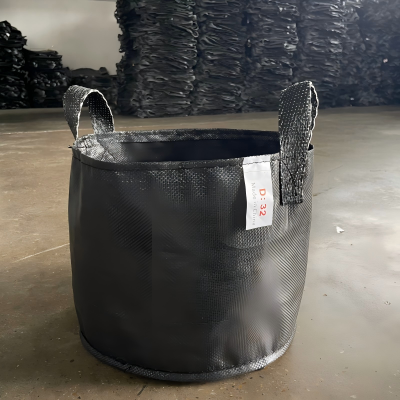
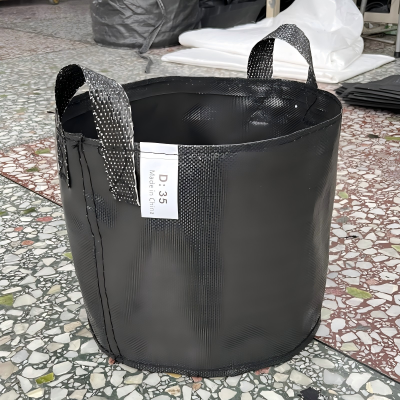
HOKBG grow bags use high-strength PP material and are designed for demanding nursery applications. The bags feature integrated handles, and the single-side handle load-bearing capacity can reach up to 100 kg under the specified test conditions.
For large trees and heavy nursery stock, strong handles can make a significant difference in daily nursery handling efficiency.
6. Choose Grow Bag Size According to the Production Stage
There is no single “best” grow bag size for all tropical plants.
Nurseries should select container volume according to:
• Plant species
• Current plant size
• Root development
• Expected production period
• Growing-medium characteristics
• Irrigation frequency
• Final transplanting requirements
• Transportation and handling needs
For example, ornamental plants may require different container volumes from palms, citrus trees, landscape trees, or other large tropical plants.
Using an oversized container too early can increase growing-medium consumption and make the container unnecessarily heavy. Using a container that is too small for an extended production period can restrict root development and increase the need for repotting.
Commercial nurseries should therefore establish a container-sizing system based on each plant category and production stage.
7. Growing Medium and Irrigation Must Match the Grow Bag
A high-quality grow bag cannot compensate for poor substrate or irrigation management.
In tropical climates, nurseries should pay particular attention to:
Growing Medium
The substrate should provide an appropriate balance of:
• Water retention
• Drainage
• Air-filled porosity
• Structural stability
• Nutrient availability
Irrigation
Irrigation frequency should be adjusted according to:
• Rainfall
• Temperature
• Plant size
• Container volume
• Substrate composition
• Nursery shade conditions
During monsoon periods, irrigation may need to be reduced because natural rainfall can already provide substantial water.
During hot and sunny periods, plants may require more frequent irrigation.
The advantage of a breathable and permeable grow bag is that it can work together with a properly designed substrate and irrigation system rather than functioning as a completely closed container.
8. Grow Bags for Different Southeast Asian Nursery Applications
Grow bag requirements can vary considerably depending on the plants being produced.
Ornamental Plants
Ornamental plant nurseries often need containers that are durable, clean-looking, easy to handle, and suitable for different production stages.
Palm Trees
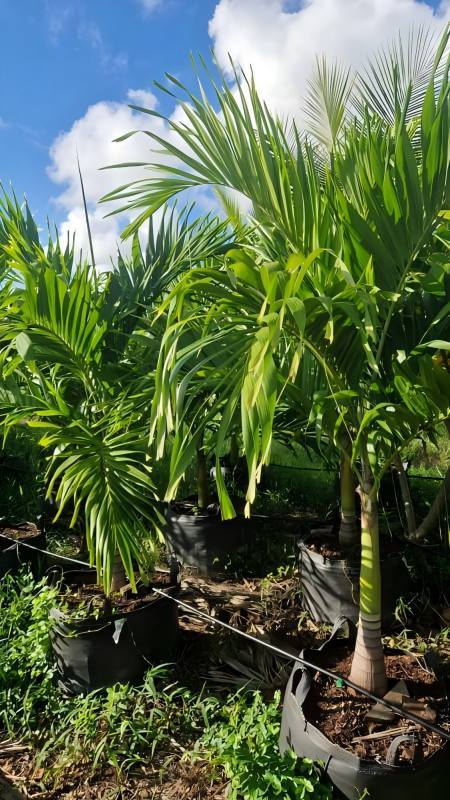
Palm trees can remain in nursery containers for relatively long production periods. Strong construction and UV resistance are especially important for larger palm trees.
Citrus and Fruit Trees
Fruit tree production requires sufficient root space and good drainage. Container selection should be based on the intended production period and final tree size.
Landscape Trees
Large landscape trees place greater demands on container strength and handling. Strong handles and reinforced construction can help when plants need to be moved frequently.
9. What Should Southeast Asian Nurseries Check Before Bulk Purchase?
Before placing a large order, professional buyers should evaluate more than the unit price.
A practical procurement checklist includes:
Material – Confirm the fabric material and construction.
UV resistance – Ask about UV stabilization and expected service life.
Strength – Check fabric, stitching, seams, and bottom construction.
Handles – Confirm handle attachment and load-bearing performance.
Water permeability – Check drainage performance under actual nursery conditions.
Air permeability – Consider whether the container supports suitable root-zone aeration.
Size consistency – Confirm dimensions and production tolerances.
Samples – Test samples with the actual growing medium and plants.
Technical documents – Request available test reports and product specifications.
Bulk production capacity – Confirm whether the supplier can maintain consistent quality for large orders.
Testing samples under local Southeast Asian conditions can provide much more useful information than selecting a grow bag based only on photographs or a product specification sheet.
10. Why HOKBG Grow Bags Are Suitable for Tropical Nursery Production
HOKBG focuses on high-strength PP grow bags for professional nursery and plant production applications.
Key features include:
• UV-resistant PP material
• Strong and durable construction
• Good water permeability
• Good air permeability
• Integrated handles
• High load-bearing capability
• Multiple sizes for different plant production stages
• Technical documentation available
• Suitable for outdoor nursery applications
HOKBG grow bags are designed for nurseries that need durable containers for trees, ornamental plants, palms, fruit trees, and other horticultural plants.
For tropical markets, we recommend selecting the product according to the local climate, plant species, production period, and expected handling conditions rather than simply choosing the lowest-cost container.
11. Conclusion
For nurseries in Southeast Asia, grow bag selection should take the tropical production environment into account.
High temperatures and strong UV exposure make UV resistance important. Monsoon rainfall makes drainage and water permeability essential. High humidity increases the importance of root-zone aeration, while heavy plants and frequent movement require strong fabric, reliable stitching, and durable handles.
The right grow bag should work together with the growing medium, irrigation system, production schedule, and nursery handling process.
For commercial nurseries, evaluating these factors before bulk purchasing can help reduce container replacement, improve handling efficiency, and create more consistent growing conditions.