Black vs. Green Grow Bags: Why Thickness Is an Illusion — and Uncoated Black Bags Win on Performance
Debunking the myths about color, thickness, UV resistance, and plant health — backed by Bureau Veritas certified testing in the Middle East.
If you have been shopping for grow bags — whether in Australia, the Middle East, or anywhere else in the world — you have probably heard the same advice: "Go green. Green bags are thicker, they last longer, and they handle the sun better."
It sounds logical. Green bags do look thicker. Black bags do look thinner. And everyone knows black absorbs heat.
But here is the thing — what you see is not what you get. The difference in appearance between black and green grow bags has nothing to do with quality and everything to do with one manufacturing choice: coating.
In this article, we break down why uncoated black grow bags are not only equal in durability to coated green bags — but actually better for your plants. And we back it up with certified test data from Bureau Veritas (BV).
1. The Illusion of Thickness: It's the Coating, Not the Material
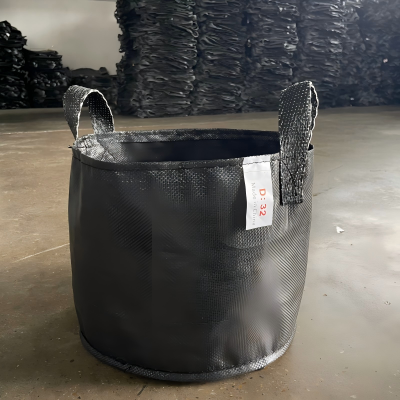
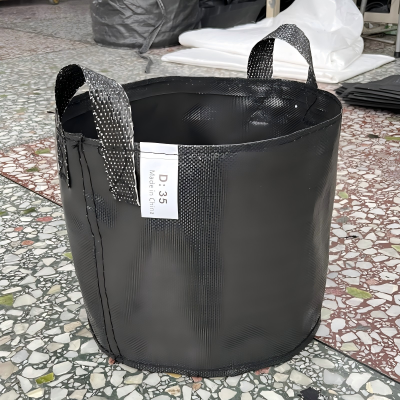
Here is the secret that most suppliers will not tell you: green grow bags are coated. HOKBG black grow bags are not.
The coating — often a laminated film layer — applied to green bags adds visual bulk and a smooth, glossy finish. This makes them appear thicker and more substantial to the eye. But that coating is a surface treatment. It does not significantly increase the structural strength, burst resistance, or load-bearing capacity of the material underneath.
Our uncoated black grow bags may look thinner, but the base material — high-strength, aging-resistant PP (polypropylene) that actually does the heavy lifting — is engineered to the same or higher specifications. We simply skip the cosmetic coating layer.
Think of it this way: A painted wall does not hold up your house. The bricks behind it do. The coating on a green bag is paint. The material is the brick. When you judge a grow bag by its coating, you are judging the paint — not the structure.
2. Certified Quality: The BV Test Report
We do not just claim our bags are durable — we have proven it.
HOKBG grow bags have been tested in the Middle East region by Bureau Veritas (BV), one of the world's leading testing, inspection, and certification companies. The BV test report specifically evaluates our PP material for:
- Sun resistance (lightfastness) — performance under prolonged, intense sun exposure
- UV resistance — ability of the material to withstand ultraviolet degradation over time
The results confirm that our high-strength, aging-resistant PP material meets the demanding requirements of Middle Eastern conditions — where UV intensity and ambient temperatures are among the harshest in the world.
If our bags perform in the Middle East, they will perform anywhere. The same intense sun that tests our bags in Riyadh and Dubai is the sun your plants face — whether in Sydney, Perth, or anywhere else in the world. The BV certification is your proof.
3. Why No Coating Is Actually Better for Your Plants
This is where the story gets interesting. The coating that makes green bags look thicker is the same coating that seals the material — and that sealing comes at a real cost to plant health.
Superior Breathability
Uncoated grow bags allow air to move freely through the material walls. This airflow does two critical things:
- Air pruning: When roots reach the edge of a breathable bag and encounter air, they stop growing outward and instead branch into a dense, fibrous root system. This creates healthier, more productive plants. Coated bags block this process, causing roots to circle the pot (root circling), which stunts growth.
- Temperature regulation: Air movement through the material helps dissipate heat from the root zone. Paradoxically, the breathability of an uncoated black bag can keep roots cooler than a coated green bag that traps heat inside.
Better Water Drainage and Permeability
Coated bags slow water drainage. Water tends to pool at the bottom, leading to waterlogged soil, root rot, and fungal problems. Uncoated bags drain excess water quickly and evenly through the entire material surface, maintaining the optimal moisture balance that plants need.
A Healthier Root Environment
The combination of airflow and drainage in uncoated bags creates an oxygen-rich root environment. More oxygen at the roots means:
- Faster growth
- Better nutrient absorption
- Stronger resistance to disease
- Higher yields
The irony: The coating that makes green bags "look better" is the same coating that makes plants grow worse. By choosing uncoated bags, you are choosing plant performance over packaging aesthetics.
4. The Heat Question: Do Black Bags Really Cook Your Roots?
This is the most common concern we hear: "Black absorbs heat. Won't it cook the roots?"
It is true that black surfaces absorb more solar radiation than lighter colors. But the impact on root temperature is far smaller than most people assume — and here is why:
- Soil is an insulator. The temperature of the root zone is determined primarily by the soil and water mass inside the bag, not the color of the material. Soil has a high thermal mass and changes temperature slowly.
- Evaporative cooling. Because uncoated bags are permeable, water evaporates through the material walls. This evaporation actively cools the bag — the same way sweat cools your skin. A sealed, coated bag cannot do this.
- Airflow cools. The breathability of uncoated material creates continuous air exchange that prevents heat buildup inside the bag.
In practice, growers using our uncoated black bags across the Middle East, Australia, and many other regions report healthy root development even in peak summer. The BV test data confirms performance under these conditions.
Bottom line: A breathable black bag with evaporative cooling can maintain healthier root temperatures than a sealed green bag that traps heat inside.
5. UV Resistance: It's in the Additives, Not the Color
UV resistance — the ability to withstand degradation from sunlight — is determined by UV stabilizers added to the polymer during manufacturing, not by the color of the finished product.
- A green bag without UV stabilizers will degrade just as fast (or faster) in the sun as a black bag without them.
- Conversely, a black bag with high-quality UV stabilizers will outlast a green bag with poor ones.
HOKBG black grow bags are manufactured from high-strength, aging-resistant PP (polypropylene) specifically formulated for outdoor agricultural use. The BV test report confirms that our PP material maintains its structural integrity after prolonged UV and sun exposure — the same standard any quality grow bag must meet, regardless of color.
Do not judge UV resistance by color. Judge it by test data. Ask any supplier for their UV test report. If they cannot provide one, color is the least of your worries.
6. Lifespan: What Actually Determines How Long a Grow Bag Lasts
The useful life of a grow bag depends on a combination of factors — none of which is color:
| Factor | What It Means | HOKBG Black Bags |
|---|---|---|
| UV stabilizers | Prevent polymer breakdown from sunlight | ✅ Formulated for outdoor use |
| Material | High-strength, aging-resistant PP | ✅ Engineered to specification |
| Sun resistance | Performance under intense sun exposure | ✅ BV tested in Middle East |
| UV resistance | Material withstands UV degradation | ✅ BV tested in Middle East |
| Coating | Surface layer — cosmetic, can peel and degrade | ❌ Not used — by design |
| Color | Visual appearance only | Not a durability factor |
7. The Real Reason Some Suppliers Push Green Coated Bags
Here is an uncomfortable truth for the industry: coating is often used to mask lower-quality base material.
A supplier can use a thinner, cheaper material and then apply a coating to make it look thick and premium. The coating hides the material's true quality — until it starts peeling, cracking, or delaminating after a season in the sun.
When that coating fails, the thin material underneath is exposed — and it was never built to last.
We take the opposite approach. We use high-strength, aging-resistant PP with proper UV stabilization and skip the cosmetic coating entirely. What you see is what you get: a bag whose quality is in the material, not in the makeup.
Summary: Myth vs. Reality
| Customer Concern | The Myth | The Reality |
|---|---|---|
| Thickness | Green looks thicker = stronger | Coating adds visual bulk, not structural strength |
| UV resistance | Green handles sun better | UV resistance comes from additives, not color. Our bags are BV tested. |
| Heat | Black cooks the roots | Breathability + evaporative cooling regulate temperature better than sealed bags |
| Lifespan | Green lasts longer | Lifespan depends on material quality, confirmed by BV sun & UV resistance tests |
| Plant health | Coating = protection | Coating blocks air pruning and drainage. Uncoated = healthier roots and higher yields. |
The Takeaway
If you are choosing grow bags based on color, you are judging a book by its cover — literally. The green coating that makes some bags look thicker is a cosmetic layer, not a performance feature. And it comes with a hidden cost: reduced breathability, poor drainage, and compromised root health.
HOKBG's uncoated black grow bags are engineered for performance, certified by Bureau Veritas for use in the world's harshest climates, and designed to give your plants the airflow and drainage they need to thrive.
Do not settle for looks. Choose proven performance.
Looking for grow bags that are tested, certified, and built for your climate? Contact HOKBG today for specifications, BV test reports, and bulk pricing.