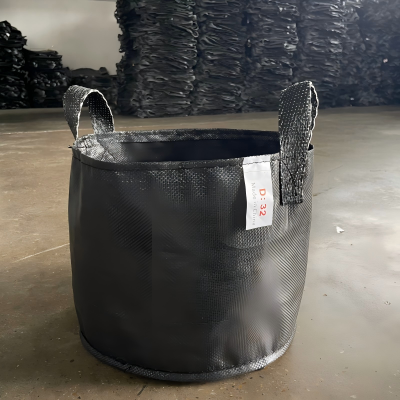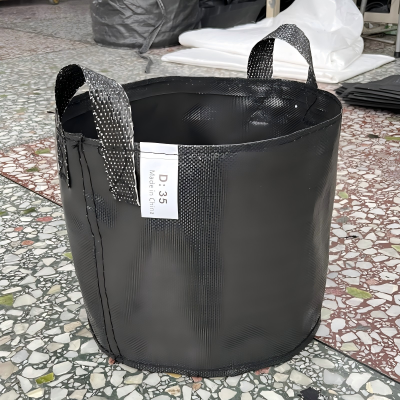
Best Grow Bags for Peonies: A Complete Guide for Nurseries and Growers
Best Grow Bags for Peonies: A Complete Guide for Nurseries and Growers
Growing peonies successfully in containers requires more than choosing a suitable pot size. For nurseries and professional growers, the right container should provide enough root space, reliable drainage, good airflow, structural strength, and convenient handling.
Grow bags for peonies can provide a practical alternative to traditional plastic containers, especially for growers who need to manage root development, container-grown plants, and seasonal plant movement.
In this guide, we explain how to choose the right peony grow bags, what features matter most, and how nurseries can use grow bags more effectively for commercial peony production.
1. Why Use Grow Bags for Peonies?
Peonies are long-lived perennial plants with substantial root systems. When grown in containers, poor drainage, restricted root space, or unsuitable container materials can affect plant development.
Traditional plastic pots provide a rigid structure, but their smooth walls can encourage roots to circle around the inside of the container.
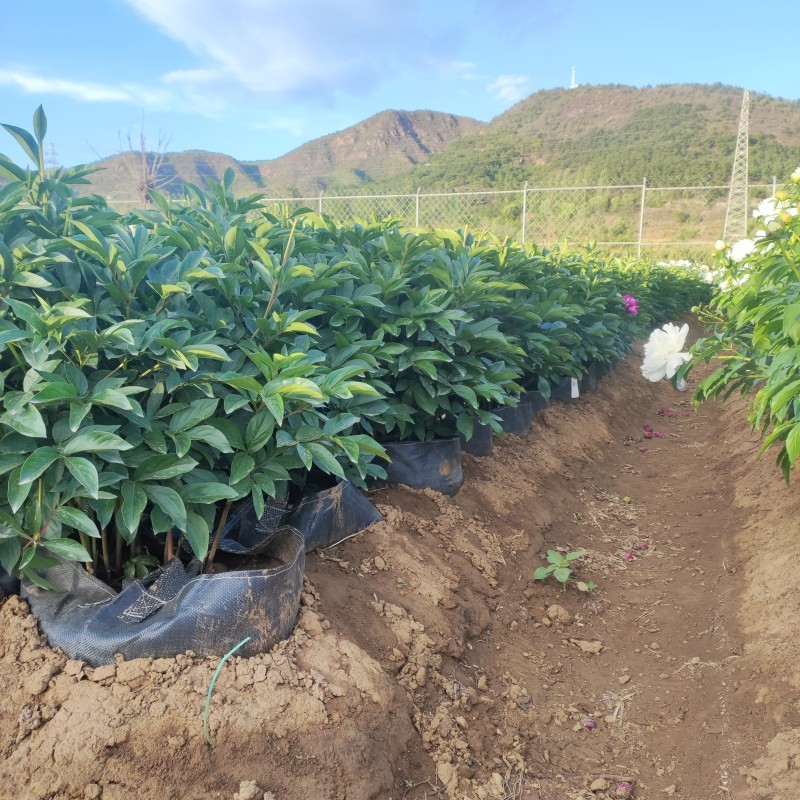
A breathable fabric grow bag provides a different root environment. Air can reach the outer root zone, while excess water can drain through the fabric. This can help create a healthier balance between moisture and oxygen around the roots.
For commercial nurseries, another important advantage is mobility.
Peonies grown in bags can be moved when necessary for:
• Nursery space management
• Seasonal production adjustments
• Plant display
• Shipping preparation
• Landscape projects
• Flowering-season rental or temporary displays
This makes peony nursery bags particularly useful when plants need to be managed as movable container-grown stock.
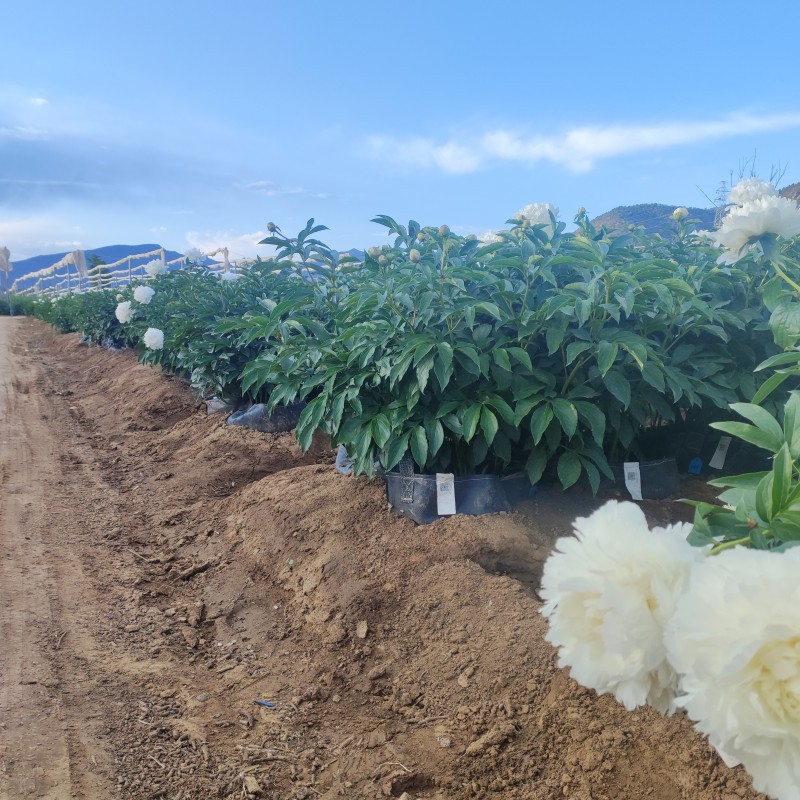
2. What Makes the Best Grow Bags for Peonies?
Not every grow bag is suitable for long-term nursery production. When selecting the best grow bags for peonies, growers should consider several factors.
2.1 Sufficient Root Space
Peonies need adequate space for their root systems to develop.
The appropriate container size depends on:
• Plant age
• Root development
• Cultivar characteristics
• Intended production period
• Final planting requirements
For young or smaller plants, a medium-sized container may be sufficient. Larger established peonies require substantially more root volume.
The important principle is to avoid selecting a container simply because it is large. The container should match the plant's current root system and production plan.
2.2 Good Drainage
Peonies generally perform better when their growing medium is well drained.
Excess water around the roots can reduce oxygen availability and create unfavorable root conditions. Therefore, drainage should be one of the first factors considered when selecting fabric grow bags for peonies.
A quality fabric grow bag should allow excess water to move away from the root zone rather than relying only on a small number of drainage holes.
However, good drainage does not mean the plant should be allowed to dry excessively. Irrigation still needs to be adjusted according to:
• Temperature
• Rainfall
• Growing medium
• Container size
• Plant growth stage
• Nursery environment
3. Breathability and Root Development
One of the main differences between fabric grow bags and conventional plastic pots is the permeability of the container wall.
Breathable fabric allows air movement through the growing container. When roots reach the edge of the bag, exposure to air can encourage natural root branching rather than continuous circling.
This process is commonly associated with air pruning.
For nursery growers, better root distribution can be useful when plants are eventually transplanted into the landscape or moved into another production stage.
A well-developed root system can also make container-grown peonies easier to manage during transplantation.
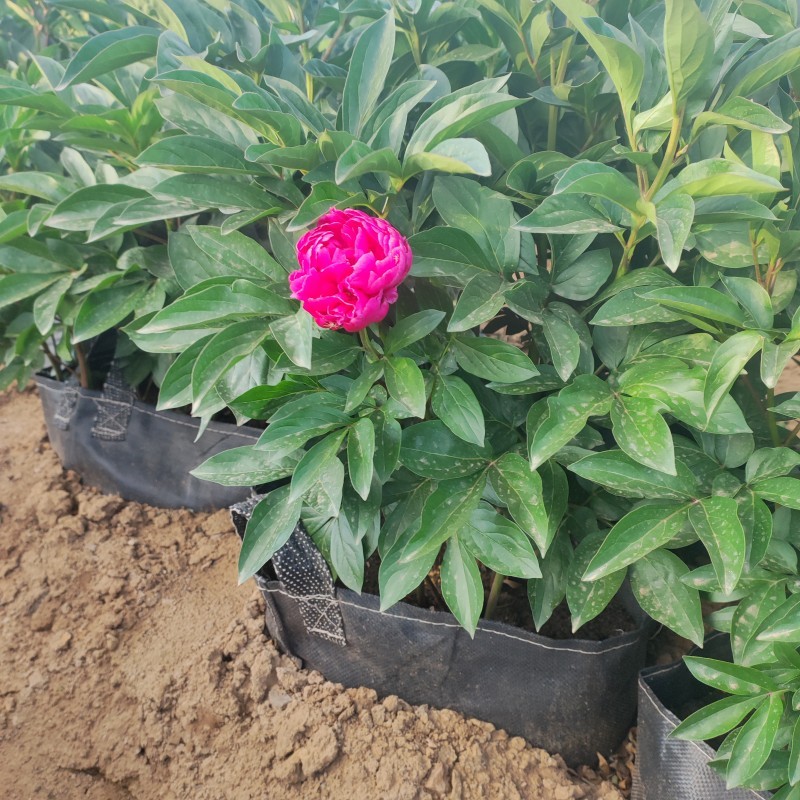
4. Choosing the Right Material
Material quality directly affects how long a grow bag can remain in production.
For commercial nurseries, the material should be evaluated according to:
• Tensile strength
• Fabric thickness
• UV resistance
• Stitching quality
• Handle strength
• Water permeability
• Air permeability
• Expected service life
Low-quality bags may be inexpensive initially but can become difficult to handle after prolonged outdoor exposure.
For long-term peony production, commercial peony nursery containers should be selected with the entire production cycle in mind rather than focusing only on the initial purchase price.
5. Why UV Resistance Matters for Outdoor Peony Production
Many nurseries keep container-grown plants outdoors throughout the growing season. As a result, grow bags can be exposed to sunlight for long periods.
Ultraviolet radiation can gradually affect polymer-based materials. Over time, insufficient UV resistance may contribute to fabric aging and reduced mechanical strength.
For this reason, UV resistance is especially important when grow bags are intended for:
• Outdoor nurseries
• Long-term plant production
• Large container-grown peonies
• Repeated handling
• Seasonal plant movement
HOKBG grow bags are made from PP material with UV-resistant properties and are designed for long-term outdoor use. Depending on climate and conditions, the expected service life is approximately 3–8 years. In tropical climates, it is generally around 3–5 years, while outside tropical areas it can reach approximately 3–8 years.
Actual service life depends on sunlight intensity, temperature, humidity, handling, and other environmental conditions.
6. Strength and Load-Bearing Capacity
Peonies can become heavy once the growing medium, roots, plant, and moisture are combined.
For large nursery containers, fabric strength is therefore an important purchasing consideration.
A professional grow bag should have:
• Strong fabric
• Reinforced stitching
• Reliable seams
• Strong handles
• Adequate load-bearing capacity
HOKBG grow bags feature integrated handles to facilitate plant movement. The single-side handle has a tested load-bearing capacity of up to 100 kg.
HOKBG also has a BV test report for product strength-related testing, providing technical documentation for customers who need to evaluate grow bag quality before bulk purchasing.
7. How to Select Grow Bag Size for Peonies
There is no single grow bag size that is suitable for every peony.
A nursery should select the size based on the actual production objective.
For young plants
Smaller containers can be used when plants are at an early production stage and have a relatively limited root system.
For established plants
As the root system develops, the plant should be moved into a larger container when necessary. This helps prevent excessive root restriction and provides additional growing-medium volume.
For mature display plants
Large peonies intended for landscape projects, commercial display, or long-term container production may require significantly larger grow bags.
The key is to match the container to the root volume and production period, rather than choosing a container based only on plant height.
8. Growing Medium Is Just as Important as the Grow Bag
Even the best grow bag cannot compensate for an unsuitable growing medium.
For container-grown peonies, growers should consider a medium that provides:
• Good drainage
• Adequate moisture retention
• Sufficient air-filled pore space
• Stable physical structure
• Appropriate nutrient-holding capacity
Because fabric grow bags provide good drainage and airflow, the growing medium should be selected together with the container.
A medium that retains too much water may create problems even when the grow bag itself has excellent permeability.
9. Watering Management for Peony Grow Bags
Container production requires more precise irrigation management than growing plants directly in the ground.
Growers should monitor:
• Moisture level inside the container
• Weather conditions
• Container size
• Plant growth stage
• Drainage after irrigation
• Rainfall
During hot and dry periods, plants may require more frequent irrigation.
During rainy or cool periods, irrigation may need to be reduced.
The objective is not simply to keep the medium constantly wet. The goal is to maintain an appropriate balance between moisture and oxygen around the roots.
10. Fertilization in Container-Grown Peonies
Because the root environment is limited compared with field production, nutrient management should be monitored carefully.
A nursery should consider:
• Growing-medium nutrient content
• Plant growth stage
• Fertilizer type
• Irrigation frequency
• Container volume
• Seasonal growth patterns
Excessive fertilizer application can create high salt concentrations in the growing medium, while insufficient nutrition may limit plant development.
For commercial production, a consistent fertilization program based on plant requirements is generally more reliable than applying fertilizer only according to visual symptoms.
11. Moving and Handling Container-Grown Peonies
One of the practical advantages of grow bags is mobility.
For nurseries producing peonies for landscaping or seasonal sales, plants may need to be moved between:
• Production areas
• Shade areas
• Display zones
• Loading areas
• Customer sites
• Temporary flowering displays
Built-in handles can make manual handling easier, especially when moving individual plants.
For larger containers, mechanical handling equipment may still be appropriate depending on the total weight of the plant and growing medium.
12. Grow Bags vs. Plastic Pots for Peonies
When comparing peony grow bags with plastic pots, growers should consider the entire production system.
Factor | Fabric Grow Bags | Plastic Pots |
|---|---|---|
Air permeability | Generally high | Generally limited |
Drainage | Through permeable fabric | Mainly through drainage holes |
Root circling | Can be reduced through air pruning | More likely along smooth walls |
Mobility | Handles can simplify handling | Depends on pot design |
Outdoor durability | Depends strongly on UV resistance | Depends on plastic formulation |
Long-term nursery use | Suitable when properly specified | Common in many nursery systems |
Storage | Can be folded when empty | Rigid structure requires more space |
Neither container type is automatically suitable for every nursery. The appropriate choice depends on the plant, production cycle, climate, handling system, and nursery requirements.
13. Common Mistakes When Choosing Peony Grow Bags
Mistake 1: Choosing only by price
A lower unit price does not necessarily mean lower total production cost. If bags fail early or become difficult to handle, replacement and labor costs can increase.
Mistake 2: Ignoring UV resistance
Outdoor containers are exposed to sunlight. UV resistance should be considered when bags will remain outside for multiple seasons.
Mistake 3: Choosing an oversized container too early
A very large container is not automatically better. Excess growing medium can retain moisture longer and increase material and transportation costs.
Mistake 4: Ignoring handles and stitching
Large plants can become extremely heavy. Handle and seam strength should therefore be evaluated before bulk purchasing.
Mistake 5: Focusing only on the bag
The grow bag, growing medium, irrigation system, fertilizer program, and nursery environment all work together.
14. HOKBG Grow Bags for Commercial Peony Nurseries
HOKBG focuses on high-strength grow bags for professional horticultural production.
Our PP grow bags are designed with:
• UV-resistant material
• High-strength fabric
• Good water permeability
• Good air permeability
• Strong load-bearing performance
• Integrated handles
• Long outdoor service life
These characteristics make HOKBG grow bags suitable for nurseries and professional growers who need durable containers for long-term plant production and transportation.
For customers evaluating grow bags before placing a bulk order, HOKBG can also provide relevant technical materials and product information for evaluation.
15. Final Guide: How to Choose the Right Grow Bag for Peonies
When selecting a grow bag for peony production, consider these factors together:
Root space – Match container volume to plant size and production stage.
Drainage – Prevent excessive water accumulation around the roots.
Breathability – Support better air movement around the root zone.
Material strength – Choose fabric and stitching suitable for the plant's weight.
UV resistance – Important for outdoor, multi-season production.
Handles – Useful for nursery movement and transportation.
Growing medium – Select a medium that balances drainage, moisture, and air.
Irrigation management – Adjust watering according to climate and plant requirements.
The best grow bags for peonies are not simply the largest or cheapest bags. They are containers that match the plant's root requirements, production cycle, climate, and handling needs.