Best Grow Bags for Mango Trees: A Complete Guide for Nurseries and Growers
Best Grow Bags for Mango Trees: A Complete Guide for Nurseries and Growers
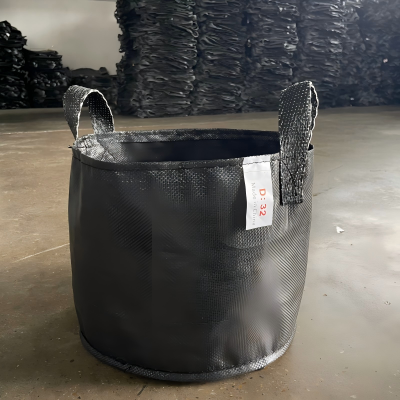
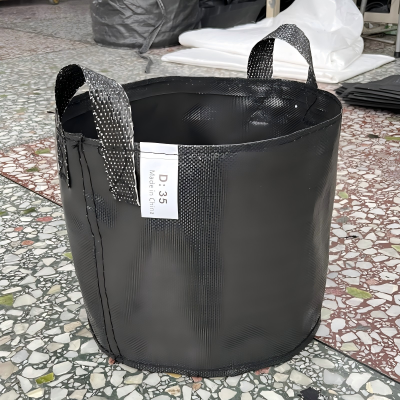
The best grow bags for mango trees are breathable, well-drained, UV-stabilized and appropriately sized for the tree's root system and production stage. For commercial mango nurseries, the right container is not simply a matter of choosing the largest bag available—it should provide enough growing volume while supporting good root development, water management and practical handling.
Mango is one of the world's major tropical fruit crops, and commercial production depends heavily on healthy nursery plants before they reach the orchard. FAO maintains annual statistics covering mango production, trade, processing and consumption, reflecting the importance of mango within the global tropical-fruit sector.
For nurseries producing grafted mango trees, landscaping suppliers handling larger trees, or growers looking for a flexible container system, UV-stabilized PP woven grow bags can be an effective option for different stages of mango production.
But which grow bag size should you choose? And what characteristics matter most?
Let's take a closer look.
Why Does the Container Matter for Mango Trees ?
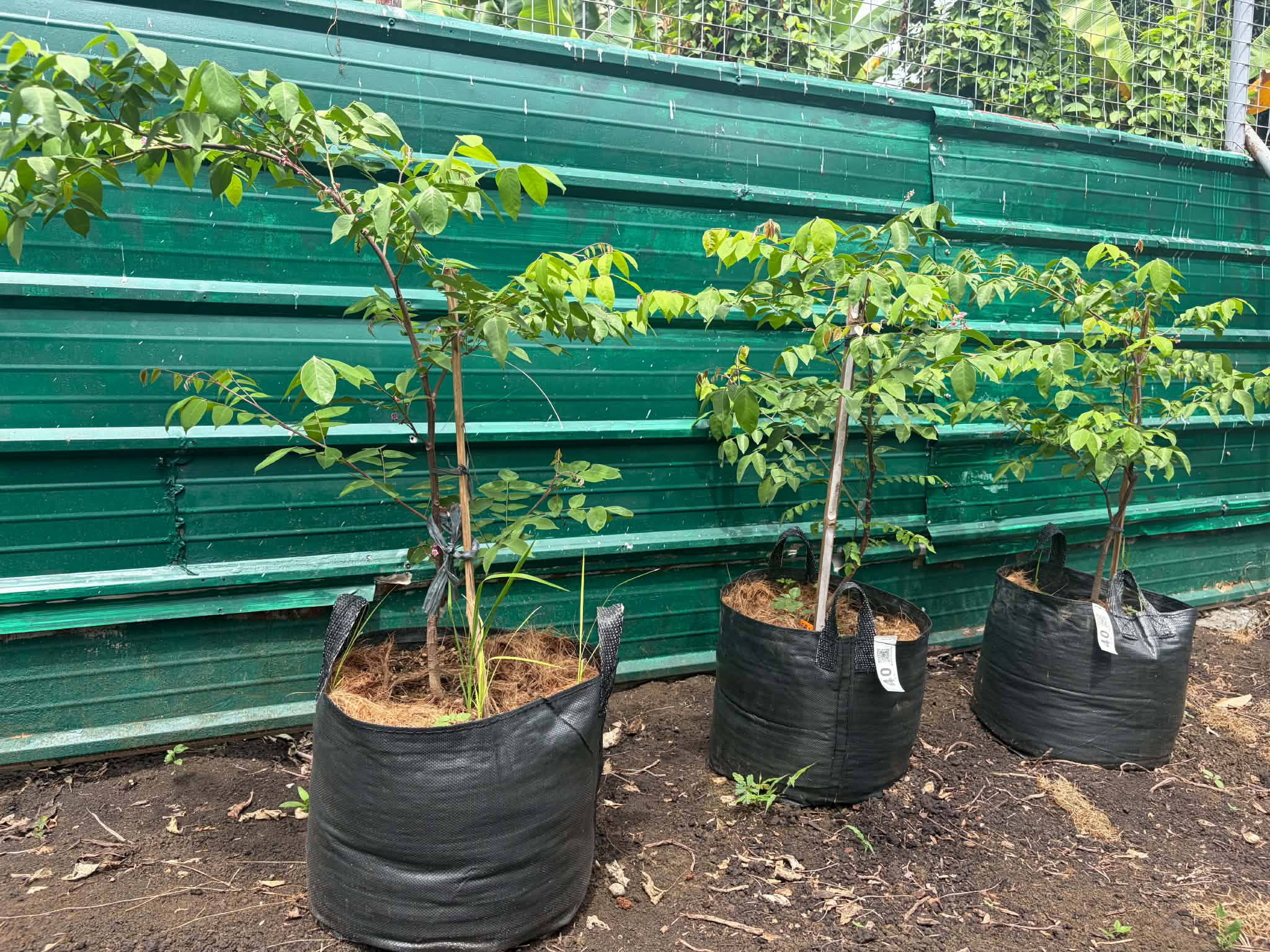
A mango tree may eventually become a large, long-lived tree, but its nursery performance starts with its root system.
The USDA Forest Service's Tropical Nursery Manual explains that nursery containers influence root development, water and nutrient availability, nursery layout, production scheduling and transportation. The manual also emphasizes that a suitable container should allow healthy root development and permit the root system to be removed with minimal disturbance.
Research on woody nursery plants reaches a similar conclusion: container production changes root growth and morphology, while container characteristics, growing-media properties, moisture and temperature all interact to influence root development. Healthy roots are also closely associated with successful establishment after transplanting.
For mango nurseries, this means that the grow bag should be selected according to:
- Tree age and size
- Root-ball development
- Production period
- Growing media
- Irrigation conditions
- Outdoor climate
- Handling requirements
- Final planting or sales size
A 20L bag may be suitable for a young mango plant, but the same size may become restrictive as the tree develops.
What Grow Bag Size Is Best for Mango Trees?
There is no single grow bag size that is ideal for every mango tree.
The correct size depends on the cultivar, tree age, root development, production period and intended market size.
As a practical nursery starting point, growers can consider the following range:
| Grow Bag Size | Typical Mango Nursery Application |
|---|---|
| 20L | Young mango plants and early nursery stages |
| 40L | Developing young trees |
| 80L | Larger nursery trees |
| 100L | Advanced nursery production |
| 200L | Larger grafted trees |
| 500L | Large landscape or specimen mango trees |
| 1000L+ | Very large trees and long-term container production |
These are practical starting ranges rather than universal horticultural standards. The final size should be determined by the tree's root system, growing media, production schedule and handling system.
For example, a nursery producing mango trees for orchard establishment may prefer relatively compact containers that allow efficient nursery spacing. A landscape nursery selling established mango trees may need 100L, 200L, 500L or even larger containers.
Why Air Pruning Matters for Mango Trees
One of the main reasons growers consider fabric containers is root architecture.
Smooth-sided containers can encourage roots to grow along the container wall. Research on container-grown trees has documented concerns about circling roots and other root defects associated with conventional smooth-sided containers.
A recent review of tree production and transplanting also emphasizes the importance of root-system quality before planting.
A breathable fabric grow bag can create a different root environment.
When growing roots reach the air-exposed sides of a porous container, some roots may be naturally pruned rather than continuing to circle around a smooth wall. This process is commonly referred to as air pruning.
However, air pruning should not be presented as a guarantee of better tree performance. Root development also depends on:
- Container size
- Growing media
- Irrigation
- Fertilization
- Temperature
- Rootstock
- Cultivar
- Nursery management
In other words, the grow bag is one part of the production system—not the entire system.
A Real Research Example: Container-Grown Mango Trees
Container production is not a theoretical concept for mango.
Researchers have conducted experiments with container-grown mango trees, including the cultivar 'Tommy Atkins', examining how seasonal temperature and water stress affected flowering. In that research, mango trees were grown in containers under controlled conditions, demonstrating that container-grown mango production can be used to study and manage important aspects of mango growth and development.
Other research has examined mango seedlings and grafted plants grown in containers as part of nursery propagation systems. A study of commercial mango nursery production in the north-western Himalayas, for example, examined container-grown mango propagation and nursery management practices.
These studies do not prove that one specific grow bag is universally “best.” Instead, they demonstrate why container design, root environment, water management and nursery practices deserve attention when producing mango trees.
Fabric Grow Bags vs. Plastic Pots for Mango Trees
Both systems can be useful, and the right choice depends on the nursery's production model.
| Consideration | PP Woven Grow Bags | Rigid Plastic Pots |
|---|---|---|
| Air permeability | High, depending on fabric construction | Usually lower |
| Water drainage | Through porous structure | Mainly through drainage holes |
| Root environment | Can support air pruning | Smooth walls may encourage circling |
| Weight | Generally lightweight | Usually heavier |
| Large-volume handling | Flexible | Can become bulky |
| Storage when empty | Easy to fold | Requires more storage space |
| Large tree sizes | Available in very large volumes | Large rigid pots can be cumbersome |
| Outdoor use | UV stabilization is important | Material formulation is important |
The comparison should not be interpreted as saying that plastic containers are unsuitable.
In fact, conventional black plastic containers remain widely used in nursery production because they are durable, lightweight and compatible with mechanization. The issue is that smooth-sided containers can also create root-circling problems, which has been documented in the scientific literature.
For growers who prioritize a breathable container system and need flexible large-volume options, woven grow bags can therefore be worth evaluating.
What Should Mango Nurseries Look for When Buying Grow Bags?
Before placing a bulk order, commercial growers should evaluate more than price.
1. Fabric quality
Ask about the PP fabric structure, thickness and intended outdoor application.
2. UV stabilization
If the bags will remain outdoors for multiple seasons, ask whether the material is UV stabilized.
3. Drainage and breathability
The fabric should provide an appropriate balance between moisture retention and drainage.
4. Handle strength
For commercial nurseries, handling becomes increasingly important as the trees become larger.
Ask the manufacturer about handle construction and recommended lifting loads.
5. Size consistency
When ordering thousands of bags, consistent diameter and height are important for nursery layout and irrigation management.
6. Custom sizes
Large-tree nurseries may require sizes that are not available from standard gardening suppliers.
A manufacturer capable of producing different diameters, heights and volumes can be more suitable for commercial production.
7. MOQ and production capacity
A low unit price is not useful if the supplier cannot maintain consistent quality throughout a large order.
Recommended Grow Bag Sizes for Mango Production
For a commercial mango nursery, a practical trial could include several sizes rather than immediately standardizing on one container.
For example:
20L–40L:
Suitable for younger nursery plants and early development.
80L–100L:
Useful when trees require additional root volume before sale or orchard planting.
200L:
Suitable for larger established mango trees and premium nursery stock.
500L+:
More appropriate for large landscape trees, specimen plants or extended container production.
The best approach is to test several sizes with the nursery's own mango varieties and production conditions.
Why Choose HOKBG Grow Bags for Mango Trees?
HOKBG manufactures UV-stabilized PP woven grow bags from 20L to 6000L, allowing commercial nurseries to use the same general container concept across different stages of tree production.
Key features include:
- UV-stabilized PP woven fabric
- Breathable woven structure
- Water-permeable design
- Air-pruning potential
- Reinforced handles
- Lightweight construction compared with many rigid containers
- Large-volume options for trees
- Custom sizes from 3000L to 6000L
For mango nurseries, commonly considered sizes can include 40L, 80L, 100L, 200L and 500L, while larger landscape trees may require 1000L or more.
Because mango production systems differ significantly between nurseries, we recommend selecting the container based on the tree's current size, expected production period, root development and handling method rather than choosing a size based on tree height alone.
Frequently Asked Questions
1. Can mango trees grow in fabric grow bags?
Yes. Mango trees can be produced in containers, and container-grown mango trees have been used in nursery production and research. The key factors include sufficient growing volume, suitable media, irrigation, drainage and proper nursery management.
2. What is the best grow bag size for a mango tree?
There is no universal size. Young mango plants may start in smaller containers such as 20L or 40L, while larger nursery trees may require 80L, 100L, 200L, 500L or more.
3. Are fabric grow bags good for mango tree roots?
Breathable fabric containers can provide an alternative root environment to smooth-sided plastic pots and may support air pruning. However, root development depends on multiple factors, including media, irrigation, temperature and container size.
4. How long can a mango tree stay in a grow bag?
This depends on the tree's growth rate, container volume, root development and nursery management. A mango tree should not simply remain in a container indefinitely because the container eventually becomes restrictive for the developing root system.
5. Are large grow bags suitable for commercial mango nurseries?
Yes. Large-volume grow bags can be useful for nurseries producing established or landscape-size mango trees. The appropriate size should be determined by the nursery's production target and handling system.
Final Takeaway
The best grow bag for a mango tree is not necessarily the biggest one—it is the container that provides an appropriate root volume, good drainage and aeration, outdoor durability and practical handling for the tree's production stage.
For commercial mango nurseries, UV-stabilized PP woven grow bags in sizes from approximately 20L to 500L+ can provide a flexible container system, while larger bags can be considered for specimen and landscape trees.
If you are planning a mango nursery project and are unsure which size to choose, share the tree age, approximate tree height, trunk diameter and expected production period with the grow bag manufacturer. A size recommendation based on the actual production system will usually be more useful than choosing a container based on volume alone.
Looking for mango tree grow bags for your nursery?
HOKBG supplies UV-stabilized PP woven grow bags from 20L to 6000L for commercial nurseries, tree growers and landscaping applications.
Contact HOKBG to discuss your mango nursery project and get a suitable grow bag size recommendation.