Best Grow Bags for Hydrangeas: A Complete Guide for Nurseries and Growers
Best Grow Bags for Hydrangeas: A Complete Guide for Nurseries and Growers
Hydrangeas are popular ornamental plants for nurseries, landscaping projects, garden centers, and commercial plant production. When grown in containers, choosing the right container is important for managing root development, moisture, drainage, plant quality, and transportation.
For professional growers, hydrangea grow bags can provide a practical solution when plants need a breathable root environment and flexible handling. However, not every grow bag is suitable for long-term nursery production.
This guide explains how to choose the best grow bags for hydrangeas, including container size, fabric breathability, drainage, moisture management, UV resistance, strength, and handling requirements.
1. Why Use Grow Bags for Hydrangeas?
Hydrangeas develop a substantial root system as they mature. When they are grown in containers for an extended period, the growing environment needs to provide sufficient root space while maintaining an appropriate balance of moisture and air.
Traditional plastic pots are widely used in nursery production, but their rigid and relatively impermeable walls provide a different root environment.
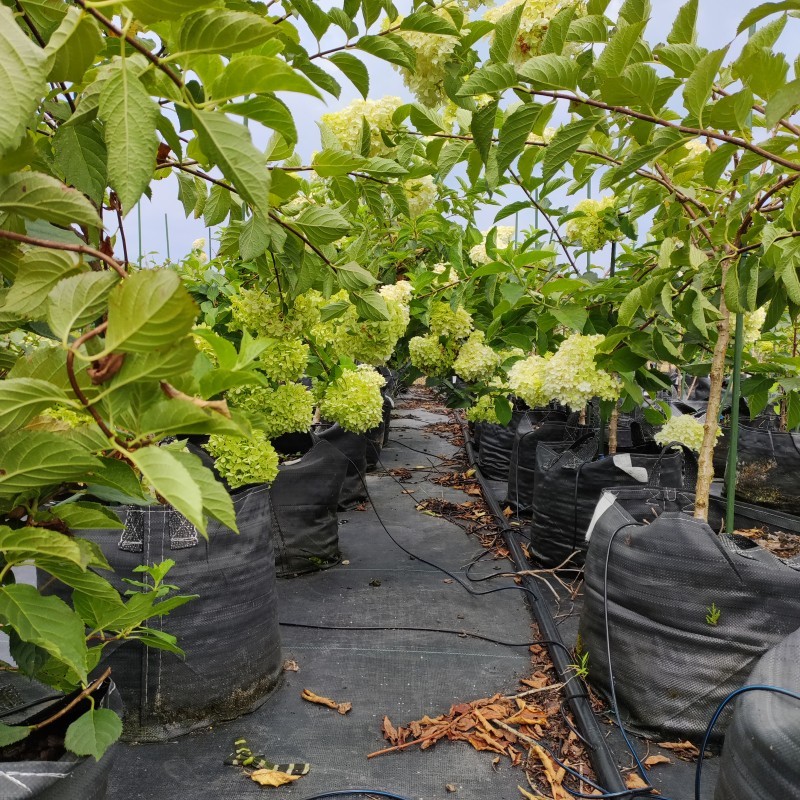
Fabric grow bags allow water and air to move through the container wall. This can help improve drainage and root-zone aeration when the growing medium is properly selected.
Another important benefit for commercial nurseries is mobility.
Container-grown hydrangeas can be moved between:
• Production areas
• Shaded areas
• Greenhouses
• Display areas
• Loading areas
• Landscaping projects
• Customer sites
For nurseries that regularly move ornamental plants, this flexibility can simplify production and logistics.
2. What Makes the Best Grow Bags for Hydrangeas?
Choosing hydrangea nursery bags should involve more than looking at the price or appearance of the product.
Professional growers should evaluate several factors.
2.1 Appropriate Root Space
The correct grow bag size depends on the plant's development stage rather than simply its height.
Important considerations include:
• Plant age
• Root system development
• Cultivar
• Production period
• Intended final use
• Expected time before transplanting or sale
A young hydrangea does not necessarily need a very large container. As the root system develops, the plant may need to be moved into a larger container.
The objective is to provide enough root volume without unnecessarily increasing growing-medium usage, irrigation requirements, transportation weight, and production costs.
3. Drainage Is Critical for Hydrangea Grow Bags
Hydrangeas require adequate moisture, but this does not mean the root zone should remain saturated.
Poor drainage can reduce oxygen availability around the roots and create unfavorable growing conditions.
This is why drainage should be one of the first factors considered when selecting grow bags for hydrangeas.
A permeable fabric grow bag can allow excess water to move through the sides and bottom of the container.
However, growers should remember that good drainage does not eliminate the need for irrigation management.
Water requirements vary according to:
• Temperature
• Humidity
• Rainfall
• Growing medium
• Container size
• Plant size
• Growth stage
• Nursery environment
4. Breathability and Root Development
One of the main advantages of fabric containers is their ability to allow air exchange around the root zone.
When roots reach the edge of a breathable grow bag, exposure to air can encourage branching near the container boundary. This process is commonly referred to as air pruning.
Compared with roots that continue growing along smooth plastic walls, a more evenly distributed root system can be beneficial when the hydrangea is transplanted or moved into another production stage.
For commercial nurseries, root development should therefore be considered when comparing traditional containers with fabric grow bags for hydrangeas.
5. Moisture Management for Hydrangeas
Hydrangeas are known for requiring consistent moisture, but the actual irrigation requirement depends heavily on the growing environment.
Growers should monitor the growing medium instead of following a fixed watering schedule.
Factors that can change water requirements include:
• Summer temperature
• Sun exposure
• Rainfall
• Wind
• Growing-medium composition
• Plant size
• Container size
During hot weather, a container may lose moisture more quickly. During cool or rainy conditions, the same plant may require less irrigation.
The goal is to maintain an appropriate moisture level while allowing sufficient oxygen around the roots.
6. Choosing the Right Grow Bag Material
For commercial hydrangea production, the material needs to withstand repeated outdoor exposure and handling.
Important quality indicators include:
• Fabric strength
• Thickness
• UV resistance
• Stitching quality
• Handle strength
• Water permeability
• Air permeability
• Expected service life
A grow bag that performs well during the first few months may not necessarily be suitable for multi-season nursery production.
Therefore, professional buyers should evaluate the product according to the complete production cycle rather than only the initial purchasing price.
7. Why UV Resistance Matters
Many hydrangea nurseries grow container plants outdoors. Grow bags can therefore be exposed to sunlight for extended periods.
Ultraviolet radiation can gradually contribute to material aging, especially when products are repeatedly exposed to strong sunlight.
For long-term outdoor production, UV resistance is particularly important.
This is relevant for:
• Outdoor hydrangea nurseries
• Long-term ornamental plant production
• Large container-grown plants
• Repeated plant handling
• Multi-season production
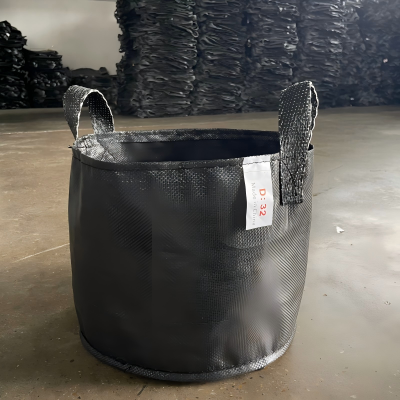
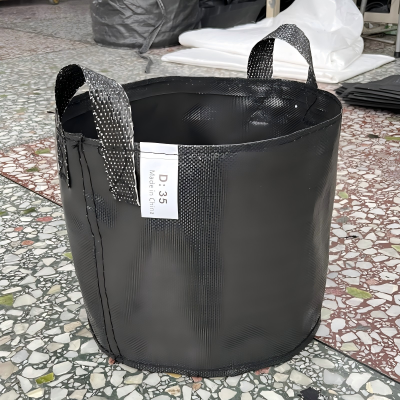
HOKBG grow bags are made from PP material with UV-resistant properties and are designed for outdoor horticultural use.
Depending on climate and actual operating conditions, the expected service life is approximately 3–8 years. In tropical areas, it is generally around 3–5 years, while outside tropical areas it can be approximately 3–8 years.
Actual service life can vary depending on UV intensity, temperature, humidity, handling, and other environmental conditions.
8. Strength and Handles for Nursery Handling
A mature hydrangea can become heavy when the plant, growing medium, and water are combined.
For commercial growers, the strength of the grow bag should therefore be considered together with the expected weight of the finished plant.
A professional grow bag should have:
• Strong fabric
• Reliable stitching
• Reinforced seams
• Strong handles
• Adequate load-bearing performance
HOKBG grow bags feature integrated handles to facilitate plant movement.
The single-side handle has a load-bearing capacity of up to 100 kg.
HOKBG also has a BV test report related to product strength testing, which can provide additional technical support for customers evaluating grow bags before bulk purchasing.
9. How to Select the Right Size for Hydrangeas
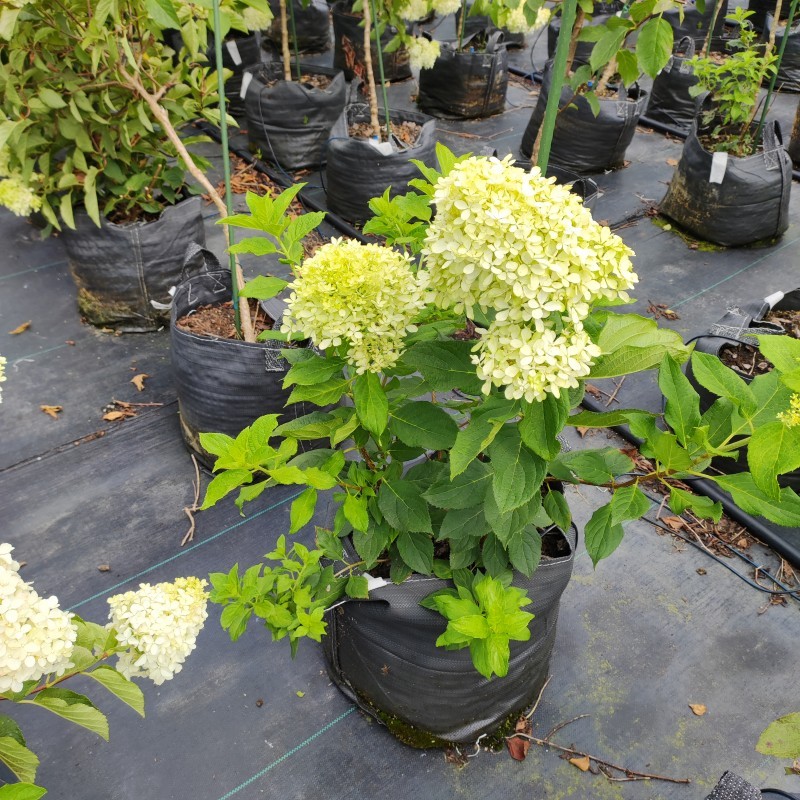
There is no universal container size for every hydrangea.
The best approach is to select the container according to the plant's current root development and planned production period.
Young hydrangeas
Smaller containers can be appropriate during the early production stage when the root system is still developing.
Established hydrangeas
When roots have developed substantially, moving the plant into a larger container can provide additional growing space.
Large display hydrangeas
Hydrangeas intended for landscape projects, garden centers, commercial displays, or long-term container production may require substantially larger containers.
When choosing a size, consider both root volume and production time.
A container that is too small may restrict root development, while an unnecessarily large container can increase material, substrate, irrigation, handling, and transportation costs.
10. Growing Medium and Grow Bag Selection Should Work Together
Choosing the container alone is not enough.
The growing medium should work together with the characteristics of the grow bag.
For container-grown hydrangeas, the growing medium should provide an appropriate balance of:
• Drainage
• Moisture retention
• Air-filled pore space
• Physical stability
• Nutrient retention
A highly permeable grow bag combined with a poorly draining growing medium may still create excessive moisture around the roots.
Therefore, growers should evaluate the grow bag + growing medium + irrigation system as one complete production system.
11. Fertilization in Container-Grown Hydrangeas
Container-grown hydrangeas have a limited root environment, so nutrient management should be monitored carefully.
A commercial nursery should consider:
• Plant growth stage
• Growing-medium properties
• Container volume
• Fertilizer type
• Irrigation frequency
• Seasonal growth
Over-fertilization can increase soluble salt levels in the growing medium, while insufficient nutrition may limit plant growth and quality.
A consistent fertilization program based on plant requirements can make commercial production easier to standardize.
12. Moving Hydrangeas During Nursery Production
Mobility is one of the practical advantages of grow bags.
Hydrangeas may need to be moved because of:
• Seasonal weather conditions
• Light requirements
• Production-area organization
• Plant grading
• Customer orders
• Landscape installation
• Transportation
Built-in handles can make manual handling easier for individual plants.
For large hydrangeas or large containers, mechanical equipment may still be required depending on the total weight.
For nurseries producing plants for landscaping, the ability to move plants without changing the container can simplify certain production and logistics processes.
13. Grow Bags vs. Plastic Pots for Hydrangeas
When comparing commercial hydrangea nursery containers, growers should look beyond the initial container price.
Factor | Fabric Grow Bags | Plastic Pots |
|---|---|---|
Air permeability | Generally high | Relatively limited |
Drainage | Through permeable fabric | Mainly through drainage holes |
Root environment | Supports air pruning | Roots may follow smooth container walls |
Handling | Handles can facilitate movement | Depends on pot design |
Outdoor durability | Strongly affected by UV resistance | Depends on plastic formulation |
Empty storage | Can be folded | Rigid and takes more space |
Long-term production | Suitable when properly specified | Widely used in nursery production |
The appropriate container depends on the nursery's plant type, production period, climate, irrigation system, handling process, and budget.
14. Common Mistakes When Choosing Hydrangea Grow Bags
Mistake 1: Choosing the cheapest product
A low initial price does not necessarily mean a low total production cost.
If a bag needs frequent replacement, the nursery may face additional material and labor costs.
Mistake 2: Ignoring UV resistance
If hydrangeas remain outdoors for multiple seasons, UV resistance should be included in the purchasing criteria.
Mistake 3: Choosing oversized containers too early
Larger is not automatically better.
An unnecessarily large container requires more growing medium and can increase transportation and handling costs.
Mistake 4: Ignoring handle and stitching quality
Large container-grown hydrangeas can be heavy. Handle and seam strength should therefore be tested before bulk purchasing.
Mistake 5: Using the same irrigation schedule in every season
Water loss changes with temperature, rainfall, humidity, wind, and plant size.
Irrigation should be adjusted according to actual growing conditions.
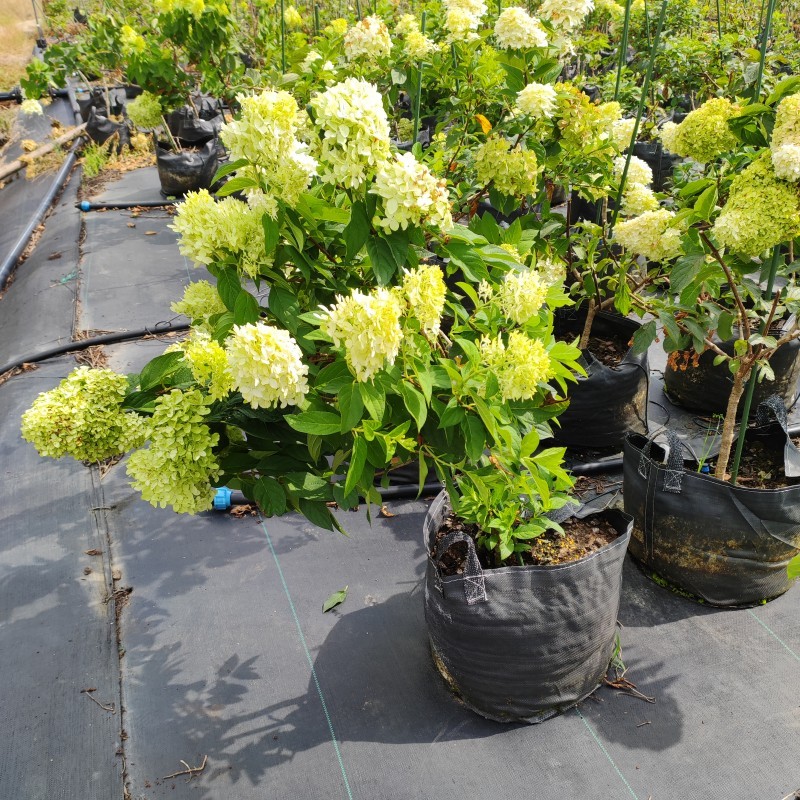
15. HOKBG Grow Bags for Commercial Hydrangea Nurseries
HOKBG specializes in high-strength grow bags for professional horticultural production.
HOKBG PP grow bags are designed with:
• UV-resistant properties
• High-strength fabric
• Good water permeability
• Good air permeability
• Strong load-bearing performance
• Integrated handles
• Long outdoor service life
These features make HOKBG grow bags suitable for professional nurseries and growers producing hydrangeas and other ornamental plants.
For customers who need to evaluate the product before placing a bulk order, HOKBG can provide relevant technical materials and product information.
16. Final Guide: How to Choose the Best Grow Bags for Hydrangeas
When selecting hydrangea grow bags, consider these factors together:
Root space – Match the container size to the plant's root development.
Drainage – Make sure excess water can leave the root zone effectively.
Breathability – Good air movement can support a healthier root environment.
Moisture management – Select the container and growing medium together.
UV resistance – Important for outdoor and multi-season production.
Strength – Fabric and stitching should match the expected plant weight.
Handles – Useful for nursery handling and transportation.
Production cycle – Consider how long the plant will remain in the container.
The best grow bags for hydrangeas are not necessarily the largest or cheapest. The right choice is a container that matches the plant's root development, growing medium, irrigation system, climate, production period, and handling requirements.