7 Grow Bag Myths Debunked + Winter Care FAQ
7 Grow Bag Myths Debunked + Winter Care FAQ
Grow bags are increasingly used by nurseries, tree growers, landscapers, and professional horticultural operations. However, there are still many misunderstandings about how grow bags perform compared with traditional plastic pots and nursery containers.
Some growers believe grow bags are only suitable for small plants. Others worry that fabric containers dry out too quickly, cannot support large trees, or are unsuitable for winter production.
Many of these assumptions are incomplete.
The performance of a grow bag depends on several factors, including the material, size, fabric structure, drainage, growing media, climate, irrigation, and handling practices.
Below are seven common grow bag myths, followed by practical winter care advice.

Myth 1: Grow Bags Are Only Suitable for Small Plants
Fact: Grow bags can also be used for large trees and commercial plant production.
Grow bags are available in a wide range of capacities.
Small containers can be suitable for smaller plants, while larger and heavy-duty bags can be used for:
• Ornamental trees
• Fruit trees
• Palm trees
• Olive trees
• Maple trees
• Landscape plants
• Large nursery stock
For professional growers, the important question is not whether grow bags can support large plants, but whether the bag size and structural strength match the plant and production period.
As a tree becomes larger, growers should pay more attention to:
• Root-zone volume
• Fabric strength
• Stitching
• Handle construction
• Load-bearing capacity
• Stability during transportation
Choosing the right bag for the production stage is more important than simply choosing the largest available container.
Myth 2: Grow Bags Always Dry Out Too Quickly
Fact: Water loss depends on many factors, not just the container material.
Because fabric grow bags are breathable, some growers assume they will always dry out much faster than plastic pots.
In reality, water requirements depend on:
• Climate
• Temperature
• Wind
• Plant size
• Growing media
• Irrigation method
• Container size
• Sun exposure
A breathable container allows greater air exchange around the root zone, but growers should adjust irrigation according to actual growing conditions.
Instead of watering according to a fixed schedule, commercial growers should monitor the moisture level of the growing media and adjust irrigation accordingly.
Practical Tip
During hot or windy weather, check moisture more frequently.
During cool or cloudy periods, irrigation frequency may need to be reduced.
The goal is not to keep the container permanently wet, but to maintain an appropriate moisture and oxygen balance around the roots.
Myth 3: Bigger Grow Bags Always Mean Better Plant Growth
Fact: The correct size is more important than the biggest size.
It may seem logical that giving a plant more root space will always improve growth.
However, an unnecessarily large container can increase:
• Growing media consumption
• Water requirements
• Fertilizer usage
• Transportation weight
• Nursery space
• Production costs
On the other hand, a container that is too small can restrict root development.
Therefore, professional growers should select the container according to:
Plant size + root development + production period + final selling size
The ideal container provides sufficient space for healthy root development without creating unnecessary volume.
Myth 4: Grow Bags Do Not Need Drainage Management
Fact: Good drainage is still essential.
A breathable fabric does not eliminate the need for proper drainage.
The root zone requires both water and oxygen.
If excess water remains around the roots for too long, oxygen availability may decrease.
Growers should therefore consider:
• Growing media structure
• Drainage conditions
• Irrigation volume
• Nursery ground conditions
• Local rainfall
This is especially important in areas with heavy rainfall or during winter when evaporation is lower.
Practical Tip
Do not place grow bags directly on surfaces where drainage holes or the bottom of the container may become blocked.
Keeping the base relatively unobstructed can help excess water drain away.
Myth 5: Grow Bags Are Not Suitable for Outdoor Production
Fact: Outdoor performance depends heavily on material quality.
Grow bags used outdoors are exposed to environmental conditions such as:
• UV radiation
• Heat
• Rain
• Wind
• Temperature changes
For long-term outdoor nursery production, material durability is therefore important.
UV resistant grow bags are designed to better withstand prolonged exposure to sunlight.
However, UV resistance is not the only factor.
Professional buyers should also evaluate:
• Fabric strength
• Stitching quality
• Handle reinforcement
• Bottom construction
• Expected service conditions
A grow bag should be evaluated as a complete structure rather than by looking at fabric appearance alone.
Myth 6: Grow Bags Are Disposable and Cannot Be Reused
Fact: Some grow bags can be reused when their structure remains in good condition.
Whether a grow bag can be reused depends on:
• Material quality
• UV exposure
• Plant weight
• Handling frequency
• Cleaning
• Storage
• Overall condition
After a growing cycle, growers can inspect the bag before deciding whether to reuse it.
Check:
• Side walls
• Bottom
• Seams
• Handles
• Areas exposed to repeated lifting
If the bag remains structurally sound, appropriate cleaning and storage may allow it to be used again.
This can help commercial nurseries reduce unnecessary replacement and material waste.
Myth 7: Winter Makes Grow Bags Unsafe for Plants
Fact: Winter production is possible, but irrigation and root protection require more attention.
Grow bags can be used during winter, but winter conditions change the root environment.
Cold temperatures can reduce:
• Plant growth
• Water consumption
• Evaporation
• Nutrient uptake
At the same time, excessive moisture may remain in the root zone for longer.
Therefore, winter management should focus on water control, drainage, temperature, and wind exposure.
Winter Care FAQ
Q1: Should I water plants in grow bags as often during winter?
Usually, no.
Plants generally consume less water during cold or dormant periods.
Instead of following the same summer irrigation schedule, growers should check the growing media before watering.
The correct frequency depends on:
• Plant species
• Temperature
• Rainfall
• Growing media
• Container size
• Plant growth stage
Avoid watering simply because it is the normal watering day.
Q2: Should grow bags be moved indoors during winter?
Not necessarily.
Many nursery plants can remain outdoors, depending on their species and local climate.
For plants that are sensitive to freezing temperatures, growers can consider:
• Moving them to a sheltered area
• Using wind protection
• Grouping containers together
• Using suitable insulation
• Protecting the root zone
The appropriate strategy depends on the plant species and local winter conditions.
Q3: Can cold weather damage the grow bag itself?
Cold temperatures can affect different materials differently.
For professional outdoor production, buyers should consider the expected climate when selecting the container.
The grow bag should also be protected from unnecessary mechanical stress when the material is exposed to extreme environmental conditions.
Most importantly, growers should avoid dragging or lifting a heavily loaded container by a damaged handle.
Q4: How should grow bags be stored when they are not being used?
Clean, dry, and structurally sound grow bags should ideally be stored in a protected location.
Good storage practices include:
• Remove growing media
• Clean excess soil
• Allow bags to dry
• Avoid prolonged unnecessary sunlight exposure
• Keep away from sharp objects
• Avoid excessive compression
• Keep organized by size
Proper storage can help extend the useful life of reusable grow bags.
Q5: Should I reduce fertilizer during winter?
Fertilizer management should be based on the plant's growth stage rather than simply the season.
When plant growth slows significantly, nutrient requirements may also change.
Over-fertilization during periods of low plant activity may be inefficient.
Commercial growers should develop fertilizer programs according to:
• Plant species
• Growth stage
• Growing media
• Temperature
• Irrigation
• Production objectives
Q6: What is the most important winter issue for grow bags?
For many container-grown plants, water management is one of the most important factors.
During winter:
Lower temperature + lower evaporation + frequent rainfall
can result in a wetter root environment.
Good drainage, suitable growing media, and appropriate irrigation management become especially important.

How HOKBG Grow Bags Support Professional Nursery Production
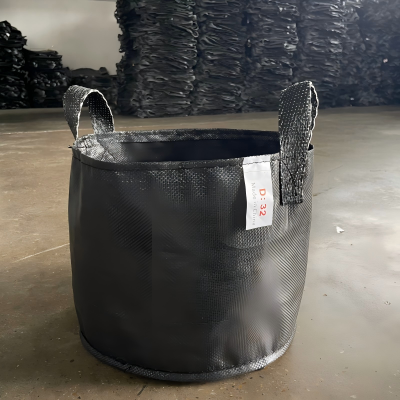
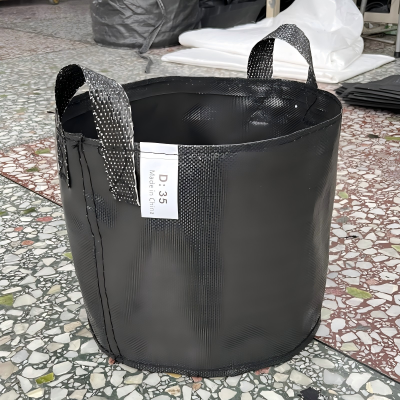
HOKBG focuses on manufacturing PP grow bags for professional horticultural and tree production applications.
Our grow bags are designed with practical nursery requirements in mind, including:
• UV-resistant material
• High-strength PP fabric
• Breathable structure
• Good drainage
• Reinforced handles
• Strong stitching
• Multiple size options
For commercial growers, we recommend selecting a grow bag according to the actual production requirements rather than simply choosing based on price or container volume.
Factors such as plant species, root development, climate, production period, irrigation system, transportation, and expected service life should all be considered.
Contact HOKBG for Grow Bag Samples and Technical Information
If you are a nursery, tree grower, landscaping company, or professional horticultural business looking for reliable grow bags, HOKBG welcomes you to contact us.
We can provide:
• Product specifications
• Technical information
• Grow bag recommendations
• Sample testing
• Support for commercial orders
Free Samples Available
HOKBG can provide free grow bag samples so customers can test the product before placing a bulk order.
Please note that the samples are free, but the shipping/freight cost is paid by the customer.
Testing samples in your own nursery can help you evaluate:
• Fabric strength
• Breathability
• Drainage
• Handle strength
• Plant compatibility
• Overall product performance
Welcome to contact HOKBG for free samples and technical information.
Conclusion
Grow bags are becoming an increasingly practical option for commercial nurseries and professional growers, but many common assumptions about them are not completely accurate.
The key points are:
Grow bags are not limited to small plants.
Water management depends on the growing environment.
The biggest container is not always the best choice.
Good drainage remains essential.
Outdoor grow bags should have suitable durability and UV resistance.
Durable bags may be reusable when properly maintained.
Winter production requires careful control of moisture and root-zone conditions.
Instead of relying on common myths, growers should evaluate grow bags according to their plant, climate, production cycle, and handling requirements.
For commercial nurseries, choosing the right grow bag is ultimately about creating a balanced root environment while ensuring the container can withstand real production conditions.